
Photographing California Redwoods: Lessons, Light Beams & Once-in-a-Lifetime Moments
Edited by Sarah Zepnick
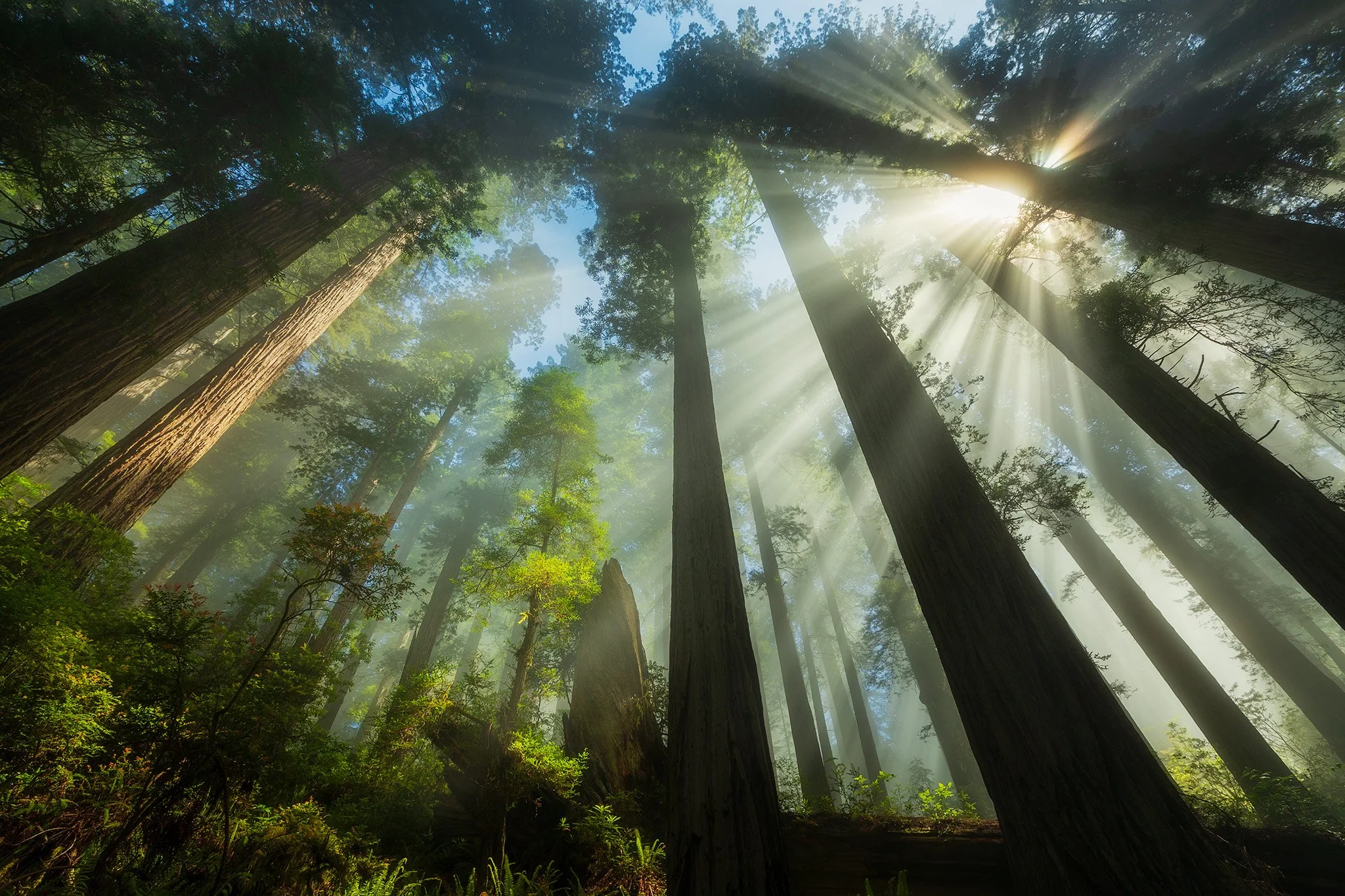
Photographing the California Redwoods is unlike shooting any other landscape in the world. My first experience in the Redwoods—on the quiet, early-morning Del Norte Coast trail—was equal parts awe, challenge, and pure magic. The moment I stepped onto the trail, surrounded by 300-foot giants bathed in soft coastal light, I understood why photographers return to the Redwoods and Oregon Coast year after year. These trees aren’t just beautiful—they’re alive with history.
I remember placing my hand on the bark of the first massive redwood I approached. For a moment, I stopped thinking about photography altogether. I just wanted to feel connected—to the forest, to the age of these trees, to something much bigger than myself. The Redwoods have endured centuries of storms, fires, heat waves, and coastal fog. Standing among them feels like standing inside living history.
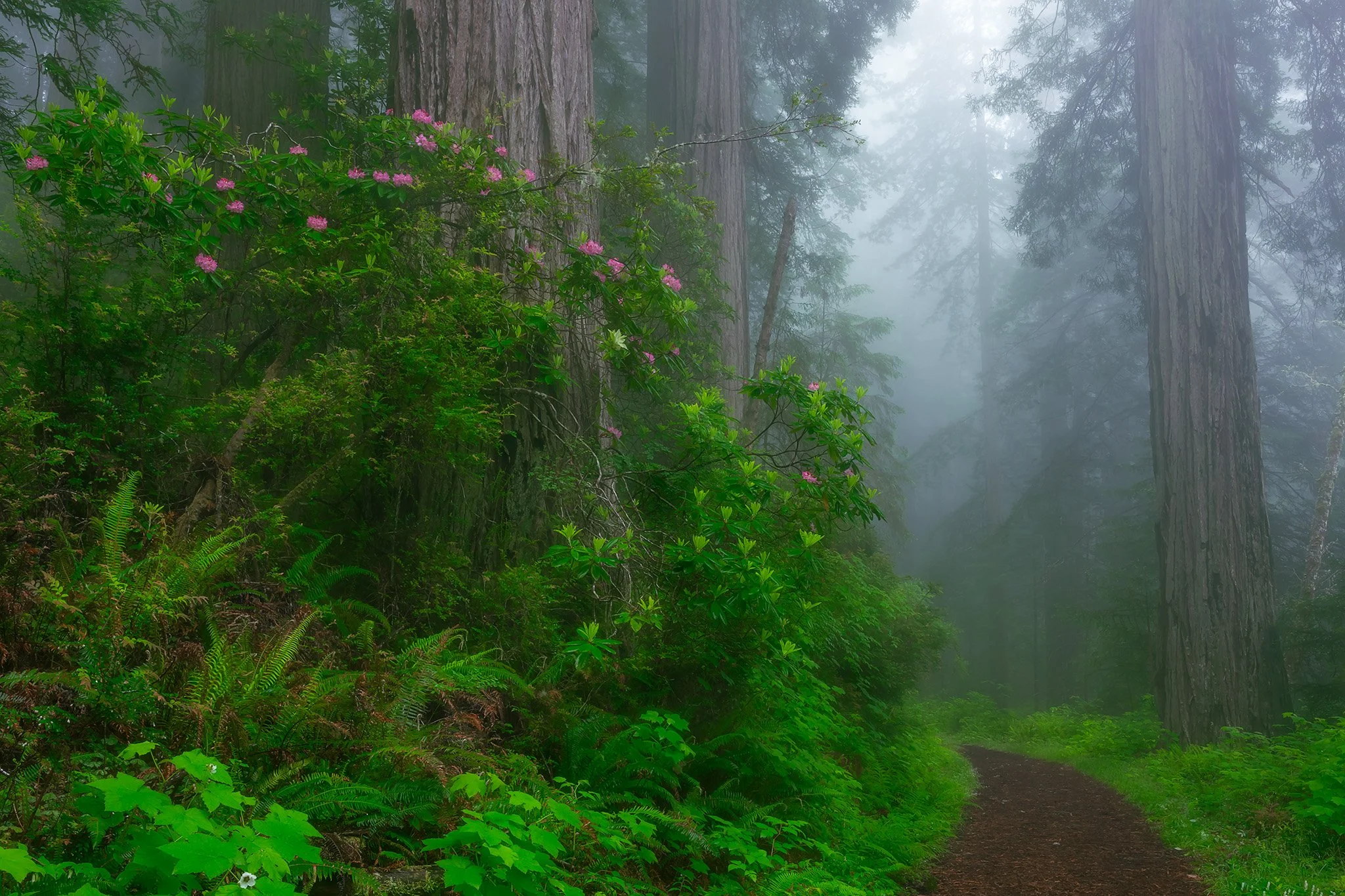
As I continued down the trail, I noticed the delicate details that make Redwoods photography so special: blooming rhododendrons reaching for soft light, carpets of sorrel glowing green, tiny white woodland flowers, and ferns decorating the forest floor like lace. Every direction—up, down, and across—offered something breathtaking.
When Fog Arrives: The Redwoods Turn Into a Dreamworld
About an hour into my hike, a thin layer of sunlight touched the tree trunks. Then I saw something I didn’t expect at all: fog rolling in from the Oregon Coast.

Most people assume coastal fog burns off quickly—but in the Redwoods, fog often returns midday, drifting silently through the trees and transforming the forest into a glowing, otherworldly fairytale.
And when sunlight finally breaks through that fog? You get god-rays—light beams in the Redwoods—the holy grail for any landscape photographer.
But capturing these moments isn’t easy. In fact, this is where things got really challenging.
The Hardest Photography Challenges in the California Redwoods
Even seasoned photographers struggle in the Redwoods. Here were my biggest challenges that day:
1. Blown-out highlights when sunlight hits the fog
The beams were incredibly bright compared to the dark forest floor, making it hard to record detail in both.
2. Keeping both foreground foliage and towering trees in focus
The extreme height and depth of the scene created tricky focus and depth-of-field issues.
3. Lens flare when shooting toward the sun
Even diffused light can produce colorful, uncontrolled flare between the trunks.
4. Glare caused by mist settling on the lens
As fog drifted past, it coated the front element and destroyed contrast.
5. Lens fog/condensation
The humid coastal environment made fogging nearly unavoidable.
Some images were salvageable in post-processing. Others were impossible to recover and had to be set aside—something every photographer experiences in the Redwoods.
Practical Redwoods Photography Tips
1. Managing extreme highlights and shadows
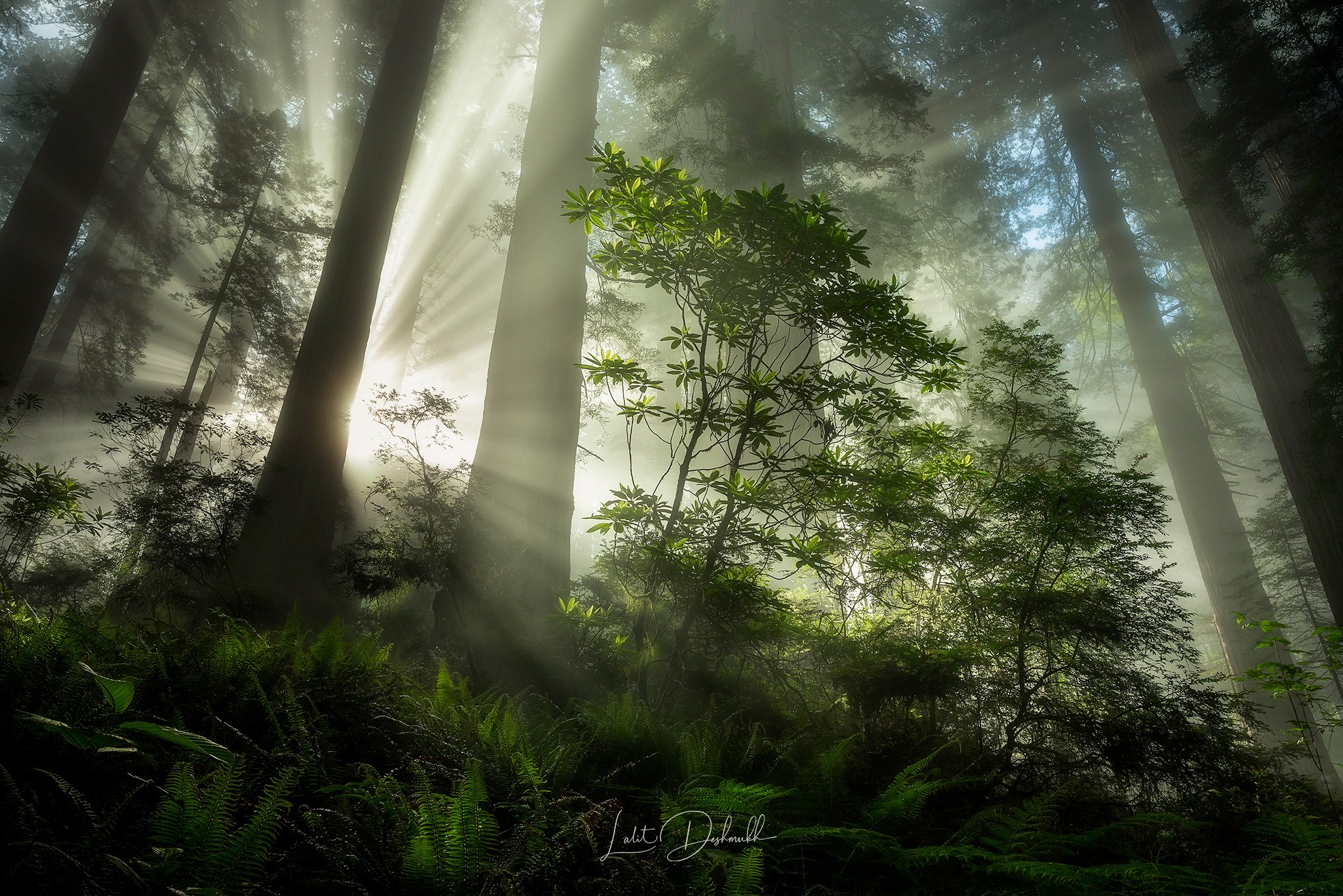
When photographing sunbeams, the dynamic range is huge. What your eyes see won’t always match what your camera captures.
To get balanced exposures:
Shoot multiple exposures (bracket) for both shadows and highlights.
Start with ISO 100–200 to maximize dynamic range.
Keep your aperture around f/16 for a deep depth of field.
Adjust shutter speed to fine-tune detail in shadows vs. bright beams.
Move your focus point to the area you’re metering—this helps keep that part of the frame crisp.
This not only solves the blown-highlight issue, but it also helps keep foliage and towering trunks sharp.
2. Reducing flare and glare in foggy conditions
Fog and sunlight can create magical effects… but they can also wreak havoc on your image.
Try these simple fixes:
Start with a clean lens and clean filters.
Avoid aiming directly at the sun—hide it behind a trunk or large limb.
Use your lens hood, your hand, or a hat to cast a shadow across the lens.
When unavoidable, take an additional frame with your hand blocking the sun (for later blending via masking).
During editing, blend the flare-free portions of multiple exposures.
These small adjustments make an enormous difference in contrast and clarity.
3. Preventing (or recovering from) lens fog
Humidity from the Oregon Coast and Redwoods is no joke.
To minimize condensation:
Keep your camera in a similar temperature environment beforehand.
Avoid going from a warm car straight into cold fog.
Bring microfiber cloths and lens wipes for quick fixes.
Even then, sometimes you’ll still battle fogged glass—but being prepared increases your chances of getting crisp, magical frames.
Finding the Right Composition in the Redwoods
Photographing the Redwoods isn’t just about technique—it’s about perspective.
Some questions I often ask myself:
Where will fog and beams be strongest in this section of the forest?
How can I show the enormous scale of the trees?
Where can I place rhododendrons or ferns for foreground interest?
How can I adapt quickly as the fog moves and light changes?
These compositional instincts come with experience—and they’re exactly the kinds of skills we teach during our California Redwoods & Oregon Coast Photography Workshops.
There’s truly nothing like seeing light beams move through massive trunks or watching soft coastal fog roll between ancient giants. And learning how to capture those moments can transform your photography forever.
Ready to Photograph the Redwoods Yourself? Join Our 2026 Workshop
If you dream of:
capturing iconic Redwoods sunbeams,
shooting foggy forest scenes along the Oregon Coast,
finding the best trails for rhododendrons in bloom,
learning hands-on field techniques for managing light, fog, and extreme dynamic range…
…then our California Redwoods & Oregon Coast Photography Workshop is for you.
We’ll guide you through the exact locations, conditions, and techniques that create once-in-a-lifetime images—while giving you professional support every step of the way.
